October Gardening Jobs

Plant new trees and shrubs
The dormant season – autumn and winter – has always been seen as a good time to plant trees and shrubs. But if the pattern of dry springs and summers experienced over recent years continues, the sooner you get plants in, the better. The soil is still warm, there’s plenty of moisture around, so plants put into the ground now will have a chance of establishing an effective root system before winter.

Liquidambar styraciflua ‘Slender Silhouette’ – planted a few days ago.

Divide perennials
Perennials that have finished flowering and have formed decent-sized clumps can be divided now. If the centre sections are woody and unproductive they can be cut out and discarded. Re-set the other pieces where you want them, water them in, and they should be able to establish before the winter.

Use Fallen leaves
Autumn leaves should be cleared from lawns and paths (and beds too, if you wish) and can be collected up and turned into leaf mould – either in a purpose made-bin (with wire mesh sides) or in bags (hessian bags are best, but you can use plastic – but punch lots of holes in the sides and bottom with a garden fork). You could leave them on the beds as a soil-improving mulch that will rot down naturally – just make sure any small plants are not swamped.

Lawn Repair
Hopefully most lawns will have turned green again by now, but this is traditionally a good time to do remedial work, and after the summer we’ve had, many of them need it. Aeration reduces compaction, and can be done either with an aerator (manual, or powered), or with a garden fork. Push it in as far as you can, wiggle it about a bit, pull back on it to slightly lift the ground, and then repeat across the whole area. This is, I have to say, a job that consumes a lot of time and energy. Scarifying (raking) is good for the lawn too – it gets rid of a lot of the dead material, as well as moss. Any bare patches can be re-seeded.

Check tree ties
Bear in mind that tree trunks will have expanded, even during the poor growing season we’ve had. So if you have trees that are staked, you may want to check they aren’t being strangled. If ties are too tight, loosen them a little. A galvanised nail banged through the tie and into the stake (not the tree!) will stop the tie from slipping down.

Weeding
A perennial task, but despite the cooler temperatures, weeds are taking advantage of the rain to sprout and grow fast. Hoeing is not so effective in damp conditions, so weeds will need to be pulled or dug out. But…

Look for self-seeded plants
…pay attention, because among the weeds will be self-seeded plants you may want to keep. These might be wild flowers such as forget-me-nots and foxgloves – some people may see them as weeds, but many gardeners are happy to have them, as they’re colourful, attractive, and free. Many cultivated perennials, such as Verbena bonariensis, and Gaura, will self seed. And you might even find some surprises. In my garden, Salvia ‘Royal Bumble’ – a choice shrubby plant – has produced a couple of dozen seedlings in the ground around it.

Salvia ‘Royal Bumble’

Clean the greenhouse
Yes, I know – you don’t want to hear this, but it’s a good idea to thoroughly clean your greenhouse (if you’re lucky enough to have one). Cleaning the glass benefits the plants by maximising the light coming in. And keeping a clean greenhouse reduces hiding places for pests to over-winter.

Think about wildlife
Dead foliage and flower stems of perennials don’t necessarily need to be cut down until next spring. Left where they are, they will provide habitat and food for wildlife over the winter.

Store tender plants
Dahlia tubers can be lifted from the ground or removed from pots, cleaned up, and stored in dry material such as compost, sand or wood shavings, in a cool, dry, frost-free place. They don’t need light, so a garage or shed would be fine. It’s usual to wait until the first frosts have blackened the foliage before doing this. You can leave them in the ground, ideally with a thick mulch of compost on top, but there’s a risk they won’t come back next year if we have a cold and wet winter.
Cannas, frost-tender salvias (such as Salvia ‘Amistad’), pelargoniums etc. can be brought into the (freshly cleaned!) greenhouse (or a shed or garage, if you don’t have a greenhouse), in pots, ideally before the first frost. So keep an eye on the weather forecast!

Dahlia ‘Mexican Star’

Planting bulbs
It’s still a good time to plant bulbs for next season, in pots and in the ground. It isn’t too late to plant early bulbs like snowdrops, crocuses, or the little reticulata irises; or too early to plant later bulbs like alliums. I placed an order with Crocus again this year. Their plants can be expensive, but their prices for bulbs were very reasonable. I ordered ten each of three varieties of tulip, thirty Allium hollandicum ‘Purple Sensation’, and a pack of Iris reticulata. Very restrained!

A freshly planted pot of Iris reticulata ‘Alida’ – these flower in spring and are small and dainty – ideal for displaying on a table, where they can be seen more easily.

One problem I’ve encountered is that it’s impossible to identify where bulbs you planted into the ground in previous years are at this time, so you can end up inadvertently digging these up (and often damaging them), while you attempt to put the new ones in. Monty Don, on Gardeners World, offered a good solution to this problem. He planted his Allium hollandicum bulbs individually into small pots. He will plant them out next year, when bulbs in the ground are showing new growth, so he can avoid damaging them.

Covering pots with mesh, netting, chicken wire etc., until the bulbs start sprouting, will stop rodents digging them up and eating them. Some people do this for bulbs planted into the ground too, but it isn’t always practical.

Sow seed
And on the subject of greenhouses… Seeds of some annuals and perennials can be sown now, and kept in the greenhouse, rather than waiting for spring. Sweet peas are a favourite, but things like Ammi major, when sown in autumn, will flower earlier next year. A few weeks ago I sowed some Scabious (Scabiosa atropurpurea ‘Black Knight’), put them on a windowsill inside to germinate, and then moved them to a greenhouse bench to over-winter.

Scabious (Scabiosa atropurpurea ‘Black Knight’) seedlings – germinated on a windowsill inside, then moved to the greenhouse bench.

The summer is over, and it’s getting cold, damp, and dark. But there are still some warmer, brighter days. And the light at this time of year has a special quality. So if you choose your time, you can still enjoy the garden.

text & images © graham wright 2022

Plants to survive a heatwave

For some years now, gardening pundits have been telling us we may need to move towards Mediterranean climate plants in our UK gardens. But this summer has imbued that idea with a powerful sense of urgency.

How many of us haven’t lost plants during this summer’s heatwaves? The true cost will only be known next year, when we will see what comes back, and what doesn’t. The heat wasn’t quite so intense up here in Shropshire. But even here, there were days when it seemed as if we were in Australia, or Arizona. The experts like to tell us what plants are most likely to survive those conditions. But you can’t beat first hand experience on the ground.

Plants in pots will always need to be watered regularly, along with those that haven’t been in long enough to have put down a good root system. But this year, I’ve also had to water some established perennials and shrubs, else they might not have made it through. There were some surprises.

Moisture-loving perennials such as Ligularia and Rodgersia were never going to like the heat. Mine are in a bog garden, but the water level of the pond that feeds it fell so low the boggy area dried out.

Border phlox, unsurprisingly, also suffered, but despite looking very sad, they made it through without being watered. I was surprised that Echinacea and Rudbeckia, which are prairie plants, needed regular watering. The RHS claim Rudbeckia came through well for them (apparently it has deep roots). They also said Eupatorium (which has, I believe, been re-classified as Eutrochium) did well, though it flowered earlier. My Eupatorium only reached 60cm, flowered late, and needed regular watering. Perhaps the difference is in the soil (mine is thin, sandy, dusty soil which drains quickly). The established Helenium got through (I may have watered it once).

Rudbeckia fulgida var. sullivantii ‘Goldsturm’ – flowering after the drought (and regular watering)

I may have despaired at the sad state of so many of the plants, but there were successes. Echinops, despite being big, leafy plants, were barely affected (and we had seedlings coming up all over the garden too). Verbascum and Achillea proved to be resilient, as did Verbena bonariensis. Gaura (which is now officially known as Oenothera), continued its campaign to take over the garden. Sedum (now Hylotelephium), being succulents, were able to store enough water in their leaves to get through.

Salvia ‘Royal Bumble’

Salvias, which are Mediterranean plants, were mixed. The perennial blue Salvia guaranitica ‘Blue Ensign’ would have died if I hadn’t watered it regularly, and failed to flower. But shrubby Salvia ‘Royal Bumble’ was undaunted, and has produced masses of flower from June onwards. It’s also self-seeded all around the plant (which is nice).

Iris sibirica, which is supposed to like damp soil, came through as if this year was no different to any other. It flowers early – before the heat struck – but afterwards, the leaves continued unabated. In fact, it clumped up so well I’ve recently had to divide the plants.

Iris sibirica

And last, but not least, Symphyotrichum reliably produced their tall mounds of foliage in the background, and have now erupted into bloom. They are one of my favourite perennials. Aster Munch came through too, but only just.

Symphyotrichums produce a fantastic show of bright daisies when all around them is decay and autumn colours

When it comes to shrubs, Viburnum plicatum ‘Mariesii’ flowered beautifully early on, but by mid-summer was all but dead. Cornus kousa, and the purple hazels (Corylus maxima ‘Purpurea’) were hardly any better. Deciduous Berberis hardly put up a fight before their leaves shrivelled and fell (the sawflies that regularly strip them must have been very disappointed).

Viburnum plicatum f. tomentosum ‘Mariesii’ – flowering before the heatwaves

This Cotinus has been in for a few years now, and hasn’t grown much (perhaps it doesn’t like the soil) but it wasn’t affected by the lack of moisture, or the heat…

Cotinus coggygria – taking on autumn colour

Hydrangeas are renowned for needing a lot of moisture, so it was surprising that Hydrangea ‘Limelight’ got through unscathed, and without additional water. Although it does have some shade – only getting the sun from mid-afternoon.

Hydrangea paniculata ‘Limelight’ The flowers change colour and then stay on the plant over winter. This one has produced a couple of fresh flowers in October.

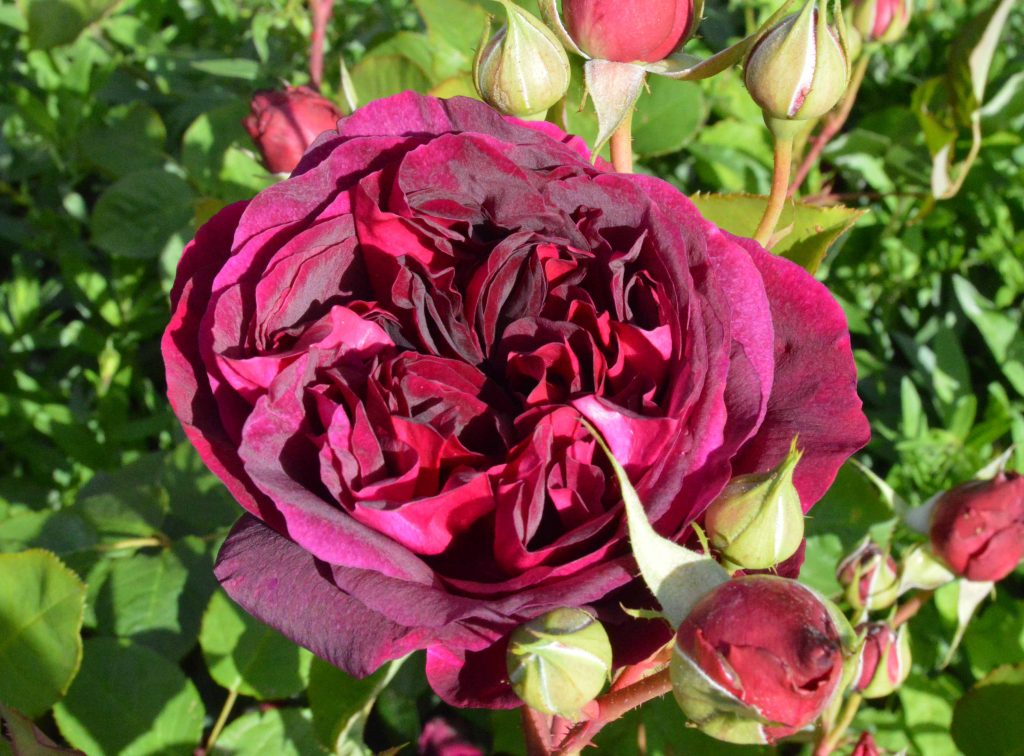
Predictably, Ceanothus ‘Puget Blue’ was at home in the conditions, flowering and growing on well. Roses don’t generally like it hot and dry. Mine muddled through quite well, though they did have a long break in flowering (all except ‘Munstead Wood’, which kept on producing blooms, albeit rather slowly).

Rosa ‘Munstead Wood’

To mis-quote the late Jimmy Grieves; it’s been a funny old year Saint. Too cold for too long in spring and early summer. Then too hot during summer. And too dry throughout. The plants haven’t known whether they’ve been coming or going. Those whose gardens are predominantly Mediterranean gravel gardens will be feeling pretty smug right now. But for those of us who like a more lush look, it’s been rather stressful. Who knows what next year will bring…

text & images © graham wright 2022

Monthly Gardening Tips – September

I’ve been writing a monthly gardening tips article for the Whitchurch Business Group website this year (I joined for my garden design business), and it occurred to me that maybe I should post the articles here too. So here goes. Apologies if I’m telling you things you already know (but it might well act as a reminder – something I often need!)

Plant perennials & shrubs

The soil is still warm, and there’s unlikely to be a shortage of moisture, so the roots of plants put in the ground now will have a chance to establish before winter. Bearing in mind how hot and dry this summer has been, consider plants that will withstand drought. Perennials that proved resilient in my garden this year include sedum (Hylotelephium), Echinops, salvias, asters (Symphyotrichum), Yarrow (Achillea), Gaura (now renamed as Oenothera) and Verbena bonariensis.

Many shrubs were badly affected by the drought, but three that performed well are Californian lilac (Ceanothus), smoke bush (Cotinus) and, somewhat surprisingly, a hydrangea – Hydrangea paniculata ‘Limelight’ (though this was in part shade).

Hylotelephium ‘Xenon’ (Sedum to you and me!)

Divide perennials

Established clumps of perennials that have finished flowering can be divided now. Discard any old, woody, unhealthy sections. Re-plant healthy sections, and give away any spares to friends, family or neighbours.

Spring flowering bulbs

Daffs, crocuses, iris, snowdrops and the like can be planted in the ground or into containers now. Buy them from garden centres, or place an order with an on-line supplier. You can order tulips at the same time, but if your soil is heavy, it’s best to wait until November to plant them in the ground, to avoid the bulbs sitting in wet soil for too long before they’re ready to start into growth.

Covering pots with mesh, netting, chicken wire etc., until the bulbs start sprouting, will stop rodents digging them up and eating them.

Hedges…

Can be given their final trim before the onset of winter.

Apples

If you have apple trees, now is harvest time. Different varieties are ready at different times (and it can vary from year to year). Test them by lifting and twisting the fruit – if they come off easily, they’re ready to harvest.

Malus domestica ‘James Grieve’

Think about wildlife

Dead foliage and flower stems of perennials don’t necessarily need to be cut down until next spring. Left standing, they will provide habitat and food for wildlife over the winter.

Lawns

From now, into autumn, is the best time to repair lawns. Re-seed any bare patches. Dips can be repaired by cutting and peeling back the turf, packing with some more soil, and then resetting the turf. Humps (which often form as the result of ant activity), can be dealt with in the same way (but remove some soil, rather than adding more – obviously!)

Plant an Autumn pot

Plants that will have some interest over autumn and winter can be used to make an attractive arrangement in a pot. Use small evergreen shrubs such as skimmia and evergreen euonymus, as well as ferns, ivy, grasses, heucheras, cyclamen, etc. Use plants that will last through winter as well as autumn, and you can add spring-flowering bulbs too.

Collect seeds

There may be more seeds to collect, and when weeding, watch out for plants that have self-seeded. For instance, in my garden I’ve noticed quite a few seedlings of an attractive red salvia called ‘Royal Bumble’.

Salvia ‘Royal Bumble’

Dead-heading

Keep on dead-heading roses, and particularly dahlias. Mine have been poor this year – they really didn’t like the shortage of moisture. But they have picked up a little now, and should keep on flowering until the first frosts.

Dahlia ‘Sunshine’ (now re-named as ‘Moonshine!)

Happy gardening!

Datura – Part 2…

I said I’d post photos of the Daturas when the flowers were out. And here they are…

This is a clump of four self-sown seeds, from a plant that is supposedly tender. The clump is currently 65cm (just over 2′) tall, by 150cm (5′) across. The individual flowers are 15cm (6″) across…

Perhaps the most astonishing thing about these plants is that despite having germinated and grown in one of the hottest, driest periods this country has experienced, I’ve never once had to water them. Perennials and shrubs you would expect to be drought tolerant have been shrivelling up in our dry, dusty soil, and have needed to be watered regularly to keep them alive. But these Datura have grown from seeds to big, lush plants, apparently oblivious to the lack of water and temperatures that have at times been in the mid thirties.

I think I mentioned that the seed packet said Datura meteloides are half-hardy shrubs that need a minimum temperature of 5C in the winter. Further research suggests they are perennials. From what I’ve read, they can be treated like a Dahlia, so that’s what I plan to do. I’ll let them be cut back by frost, then dig up the roots and see what I’ve got. Hopefully they will have tubers that I can store over winter. If that doesn’t work, I’ll still have the ones in pots indoors and in the greenhouse. And I’ll collect some seed for next year too – there are seed pods forming…

If our summers continue to be this hot and dry, Datura could prove to be the perfect low maintenance annuals – simply scatter the seeds on a bare patch of ground and let them get on with it. Who would have thought exotics could be so easy!

text & images © graham wright 2022

Nursery mis-labelling

When we buy plants that are not fully mature, or have yet to flower, we’re trusting the nursery to give us the variety they say they’re giving us, without any way of being sure. It’s surprising how many times our trust is misplaced.

Earlier this year I bought two plants of Anemone ‘Honorine Jobert’, from different nurseries, at different times, for a white-themed bed I’m creating in our garden. They have both come into flower now. This one is undoubtedly the white form known as Honorine Jobert…

The other one has turned out to be one of the more common pink forms (the colour is a bit washed out in the photo, but trust me, it’s definitely pink)…

Is it time for an inquiry? I’ve found both plant labels, but they don’t have the nursery names on them. One, I think, was mail order; part of an order for various plants. The other I bought from a nursery in persona personalmente, as it were. The trouble is, I’ve had them for a while, I’ve visited quite a few nurseries and plant fairs this year, and I can’t remember where I bought these plants. I think I know where the mail-order one came from. But I can’t be sure which is which.

Perhaps I should have been more organised, and paid more attention, so that I could go back to the offending nursery with the evidence. But that’s not really what buying plants, and building a garden is all about. So basically, I’ll have to put it down to experience. I’m not giving up on my white bed. I’ll move the offending pink anemone (which is still an attractive flower) to somewhere more appropriate in the garden, and buy one or two more white ones when I can (and hope they turn out to actually be white!)

Sacred Datura…

Or Datura meteloides; a tender plant which is very similar to the better known Brugmansia (commonly known as angels’ trumpets). I bought a packet of Datura seeds a few years ago. They germinated well, and growth was initially good, but all of the plants slowed down (I’ve kept some indoors, and others in an unheated greenhouse) and have never grown to more than about 20cm. But the flowers are spectacular. The buds elongate, and the petals emerge in a whorl…

The whorl opens to a star…

And then, finally you get to see the full trumpet…

The seed packet said that, like Brugmansia, Datura are woody plants – shrubs – but mine seem to die back in winter. Even the two I have indoors mostly died back. Some of last year’s growth survived the winter, but it clung onto life looking sickly and yellow, while new, healthy shoots from the base overtook it.

In researching this post, I discovered some very interesting facts about this plant, particularly here. I can confirm that the leaves are sticky, and do have a very strange smell about them. I wouldn’t call it unpleasant exactly. But whatever you do, don’t lick your fingers after touching it!

It’s a curious co-incidence that Datura meteloides has a synonym of Datura Wrightii, as Wright is my surname. I remember once seeing a cactus (an unpromising, ground-crawling thing) with the name Wrightii, so I guess there must have been a plant collector in that part of the world (North/Central America) who shared my surname.

Apparently D. meteloides (or D. Wrightii) is native to Arizona. Which explains another phenomenon. Some of my plants produced impressive, spiky seed capsules, similar to a conker, which burst open to reveal lovely big, round, black seeds. I must have dropped some in one of the beds, because earlier this summer, seedlings started to appear. They had long seed leaves (which threw me, as the seeds were round) and I couldn’t initially identify them. Worried they might be from a mutant perennial sunflower we made the mistake of planting two years ago, and now can’t get rid of, I pulled the first few out. When more came up I decided to take a chance and see what they turned into. And here they are…

In the eight days since taking this photo they’ve doubled in size, and numerous flower buds are forming. They’ve grown through two heatwaves, in full sun for much of the day, remaining lush and healthy, despite my never having given them a single drop of water. Apparently having evolved in the Arizona desert, I suppose our little hot spells are nothing out of the ordinary for them. But looking ahead to increasingly hot, dry summers here in the UK (more about that next time), these plants could be the ultimate easy to grow, maintenance-free summer bedding – throw the seeds on the ground and watch your beds fill with the most amazing, tropical-looking foliage and flowers. Then again, they could just be the next Himalayan Balsam. Oh my god – what have I done?!

When the flowers are out, I’ll post another photo. This could be amazing!

Text & images © graham wright 2022

The Curious Incident of the Earwig in the night time…

When your plants come under attack, it isn’t always easy to identify the culprits.

Our runner bean wigwam, under-planted with courgettes

We’ve had a lot of damage to plants this year, including the runner beans. They flowered, but no beans were forming. At first, I blamed the sparrows, with which we’re inundated, and which I know were destroying our spinach and chard (until we covered them with mesh). The sparrows were all over the beans too. But then I remembered when, a few years back, I’d grown the most glorious wigwam of sweet peas; as full, healthy and lush as anyone could wish for. But without a single flower. It wasn’t until I went out at night with a torch that I realised why: they were crawling with earwigs.

Flowers but no beans!

Another night-time foray showed it’s the same case with the runner beans. Flowers come out, the earwigs eat them, and no beans form. How do you deal with these tricky little varmints? Well, you can go out at night and pick them off, but they tend to scarper as soon as you start, and you’ve only got one hand to try and catch them with while you’re holding the torch.

Earwig nesting box!

An easier way is to put a plant pot stuffed with straw on top of the canes. The earwigs crawl up into the pot at the end of the night, thinking it’s a nice cosy, safe place to hide out during the day. Oh the naivety! Come daylight we tip out the pot and… well, you can guess the rest. Nightly hauls have varied between one and eleven. Hopefully we can get the numbers down sufficiently to give the beans a chance to do their thing, and provide us with a harvest.

The residents evicted into a plant tray

Many garden pundits will try to tell you earwigs are good to have in the garden, because they predate pests like greenfly. The reality is that not even the heaviest infestation of green or blackfly will leave you with no crop at all. A moderate infestation will do little damage, and provide food for other, less destructive predators, like birds, hoverflies and ladybirds. Earwigs may control aphids, but if they deprive you of a crop – either edible or ornamental – how are they helping? Aphids will at least share the spoils!

In my experience earwigs, like that other favourite of the so-called experts, the wasp, do far more harm than good.

text & images © graham wright 2022

Roses in June

June is perhaps the peak time for roses, and the roses in my own garden are all in full flower now.

This unknown climber pre-dates my arrival. It has a light scent, and deep, velvety red blooms

Roses can provoke a mixed response. On the one hand, they’re the icon of the English garden, and the nation’s favourite flower. On the other, they can seen as somewhat old-fashioned. I think this is unfair.

Roses have suffered from being badly used in the past. Mid-century rose gardens tended to be sterile and twee, with paths lined with lollipop standards, and hybrid tea rose bushes set out in isolation, often in a desert of bare soil, with heaps of farmyard manure around them.

Rosa ‘Lady of the Lake’ – a repeat-flowering climber with open blooms, allowing pollinators access to their nectar.

Nowadays, the trend is for roses to be more of an integral part of the garden. Modern shrub roses, climbers and ramblers mix well with other garden plants, and can work with most garden styles, from the formal to the traditional cottage garden, and even the currently popular ‘prairie planting’ (sometimes referred to as the ‘naturalistic’ or ‘new perennial’ style). There are roses to suit every style, and in most colours (except blue and black).

When designing my own garden I chose roses from David Austin.[1.] His roses emulate the old, romantic roses, but like all growers, he bred for vigour, attractive foliage, disease resistance, and a long flowering period. Particularly important, he didn’t neglect scent, and most of his cultivars have good fragrance. When designing a garden, this is an important consideration, because scent adds another, very delightful element to a design.

Climbing Rosa ‘Constance Spry’ grown on a metal pergola – this was the first rose David Austin bred. It has good fragrance, but sadly only flowers once.

Apart from the climbers, I’ve used shrub roses to add colour and scent to the borders. They benefit from dead-heading (a job I rather enjoy), but while correct pruning helps the overall shape, they’re not too fussy. They hold their own in a shrub and perennial border, as seen here…

This is Rosa ‘Dame Judi Dench, in amongst the perennials. The garden is in its infancy – both rose and perennials will expand to fill the gaps.
Judi in close-up!
Rosa ‘Gertrude Jekyll’ – similar to Constance Spry, but repeat-flowering, and with an even stronger scent.
Gertrude Jekyll in the border, with claret Rosa ‘Tuscany Superb’ further along.
Rosa ‘Tuscany Superb’

Roses are so familiar to us, we can easily take them for granted. But we shouldn’t overlook just how beautiful and useful they are in the garden, providing colour and scent, as well as lush foliage. There are roses for most situations, including shade, and many will flower from early June, right through the growing season. Climbers and ramblers will cover walls, fences, pergolas and arbours; or grow up into a tree. And shrub roses are perfect for the borders; used like any other small to medium sized shrub.

Rosa ‘Munstead Wood’

text & photos © graham wright 2022

[1.] There are many other rose breeders around, producing some superb cultivars. I have to say, prices for David Austin roses are higher than most other breeders. I’m not sure if that’s always been the case, and whether the company are playing on his fame (David himself sadly passed away a few years ago).

Update on the Garden…

Work on the garden is, as they say, on-going. It’s mostly the patios and paths that are yet to be done. Strictly speaking, these form the main structure of the garden, and should be put in first. But as I’m doing these myself, in my spare time, and I’m no builder, they’re going to take some time. So my strategy has been to put in the living structure of the garden first, so that it can be growing, and enjoyed, while I gradually work on the hard landscaping. This, for instance, is Viburnum plicatum f. tomentosum ‘Mariesii’, a very pretty shrub with a layered structure and masses of white flowers in early summer, as well as good autumn colour. It’s one of the earliest of the shrubs in our garden to come into leaf…

You can see the flower buds that are forming, among the fresh green new leaves. This specimen is spreading well, and will hopefully put on some height this year.

There are still some beds unmade too. This one, close to the house, needs the edges to be built up and concreted in before it can be fully planted up. But I have managed to get enough of it done to plant the shrubs against the fence between the garden and the driveway…

In the foreground is a Viburnum x. Burkwoodii; the large flower clusters are sweetly, and strongly scented, so it’s a good plant to have by a path. Here, it’s close to the house too. Beyond that are two Pyracanthas (firethorns); good shrubs to train against a wall or a fence in shade. Last in line, and smallest, is a Chimonanthus (Winter Sweet). Once it’s grown up a bit it should have scented yellow flowers on bare branches in the winter. This bed will incorporate a semi-raised pond, with a fountain to distract from the neighbours who annoyingly make all their phone calls outside their side door (the popular expression ‘get a room’ comes to mind here). Hopefully the foliage will muffle the sound somewhat too, once these shrubs have grown up.

Elsewhere, the broom (Cytisus) by the pergola under the birch tree is in full bloom now. Broom seems to like our soil; there were several here when we arrived, and it self-seeds freely. You can’t see them, but there are pigeons nesting in this one. I’m not sure it’s a great location. The tree above them is frequented by crows and ravens, who are already giving the pigeons some harassment. I just hope they don’t take their young.

The small tree in front, yet to come out, is a Clerodendron trichotomum, bought from the lovely Burrows Gardens in Ashbourne, Derbyshire.

We planted some tulips in the beds, but also, we tend to plant the new bulbs in pots for a good show in their first year, and then move them into the beds when they’ve finished flowering. We’ve done this with tulipa ‘Balerina’ (orange), ‘Purissima’ (white), and ‘Konigen der nacht’ (purple), and Narcissi including ‘Thalia’, and most seem to be naturalising well (it helps that the soil is light and sandy)…

Spring annuals and biennials include Myosotis (forget-me nots – self-seeded, but positioned) and Lunaria (honesty) from seeds sowed by us…

I finally built a second compost bin, from re-claimed pallets, so I’ve closed off the existing one. The plan is to transfer the top layer from the old to the new bin so I can use the composted material at the bottom as a mulch. It’s on my list of jobs to do…

You can see I’ve put in a support structure for the raspberries, and tied them in. These are actually an autumn-fruiting variety, which should be cut to the ground in spring. But the summer-fruiting raspberries we put in didn’t grow. As the autumn-fruiting ones are reproducing like rabbits, I thought I’d stick with them, but try an experiment. Half have been cut to ground level, as normal, and the new shoots that should produce fruit in autumn are already coming through. The other half, I haven’t cut back, but have instead tied in. They already have flowers forming, and should fruit early. If this works, it will show that a raspberry is a raspberry, and whether it fruits early or late, depends upon the pruning regime.

The re-built raised bed at the end is looking quite good at the moment. Most of these plants were there when we arrived, though they have been moved around. I’ve added a Callistemon (bottlebrush) which is one of a few cuttings brought with us from our last place. There’s a rather nice alpine phlox in this bed…

At the weekend, I cut the grass for the second time this year, but this time I cut paths through the main area, and will let the rest grow longer for wildlife, and wildflowers, such as this speedwell…

…to which this photo doesn’t do justice. The flowers are closed, because it was raining. They’re small, but very pretty, in a striking mid-blue. The leaves are small, and a rich, mid-green, so a very good addition to a lawn – much better than grass, in fact.

The hedgerows around the garden are just coming into leaf now; mostly hawthorn, but with some holly, crab apple and wild cherry too. And at last the weather is warming up a little. So things should really get going in the next few weeks…

text & images © graham wright 2022

Evergreen or Deciduous?

It seems to me there’s always been a tension between the use of deciduous and evergreen trees and shrubs in gardening and garden design. I have to say, I’ve tended to favour the former. Maybe it’s because I grew up in a time when gardens were often filled with boring, uniform conifers; from large, quick-growing hedging plants like the dreaded Leylandii, to a proliferation of ‘dwarf’ conifers (many of which turned out to be rather bigger than expected).

Of course, some plants are more exciting than others, and that goes for both evergreens and deciduous.

Defending the deciduous…
People who favour evergreen plants point out that they give form, presence and greenery throughout the winter, whereas deciduous plants do their thing in the growing season, then shrink back to virtually nothing in winter, leaving then garden all but empty but for a few dead-looking sticks.
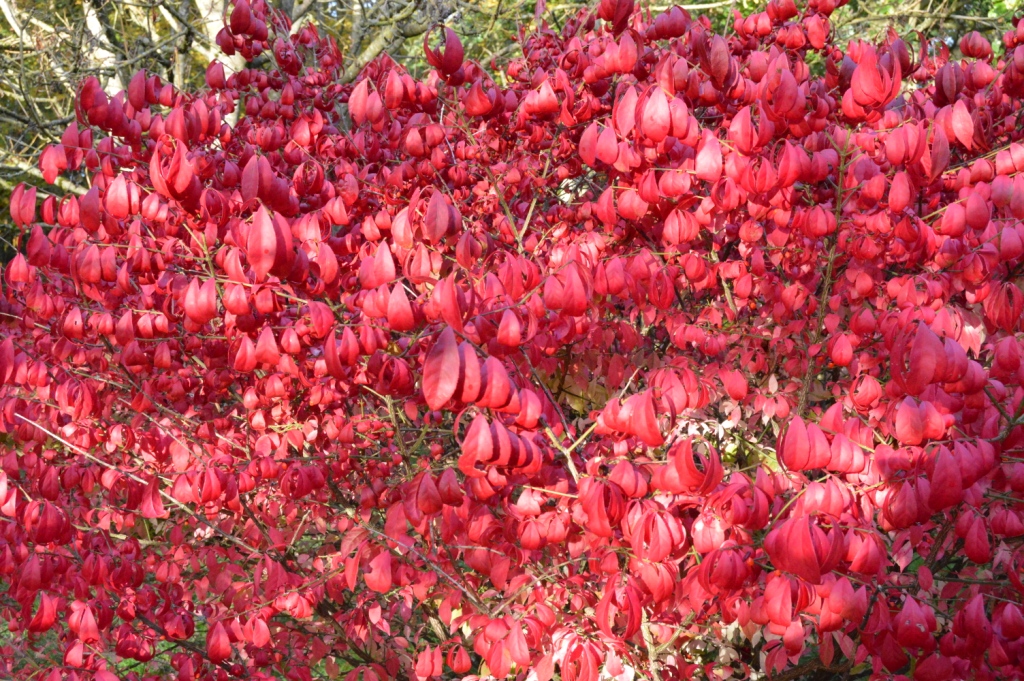
It’s true that deciduous plants are much reduced. But bear in mind many of them do something like this before they drop their leaves…

Euonymus alatus

Add in beautiful flowers during the growing season, and perhaps we can forgive them for being somewhat sparse in their dormant period. But actually, those dead-looking sticks are not as uninteresting as you might at first think. Denuded of leaves, woody plants display a form and structure that is architectural; sculptural, and very beautiful…

A mature beech tree at Hodnet Hall & Gardens, Shropshire

Their branches make interesting shapes. They change with the changing light. When it’s sunny, they cast bold shadows on the ground. They accumulate lichen and moss, which adds shading and texture. And in fact the idea all deciduous plants are dormant in winter isn’t correct either. Some of them flower on bare branches…

Hamamelis x. intermedia ‘Jelena’ – Witch Hazel

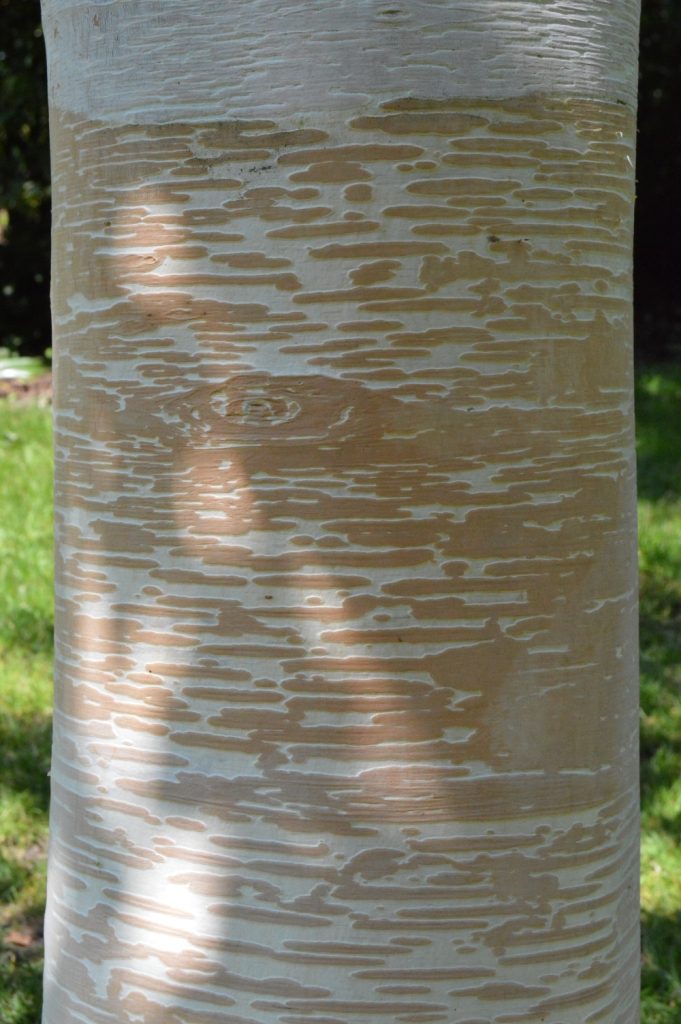
Others, particularly willow and hazel, produce attractive catkins. And once the leaves have fallen, we discover that many plants have beautiful stems and trunks…

The bark of an unlabelled tree (a birch?) in Dorothy Clive gardens , Shropshire
Cornus sanguinea ‘Midwinter Fire’ (Dogwood)

There’s something both very spiritual, and also rather scary about plants that are dormant during the winter. They speak to us of the transient nature of life. But they also highlight the great joy of renewal in spring; something you might miss if you only have evergreens.

Evergreens – not so boring after all…
While evergreen aficionados point to a lack of winter interest in deciduous plants, those in the opposing camp tend to think of evergreens as being boring. They may have presence all year round, but it never changes…

A rhododendron in full bloom in April at Bodnant gardens, North Wales

Start to think about it, and you realise that evergreens produce some of the most impressive and prolific blooms of all plants, from rhododendrons and camelias, to Olearia (daisy bush), magnolias, and ceanothus (California lilac). And far from being a uniform, dull green, they come in many shades, from dark to light, and leaves with attractive markings and patterns.

Euonymus fortunei

And many evergreens have something else to offer too. For as long as there have been gardens, people have indulged their creative tendencies by trimming plants into interesting shapes.

RHS Garden Bridgewater

The most useful plants for topiary are evergreens such as box and yew. There is, I suppose, a contradiction here, because how often do you see box, or yew for that matter, allowed to grow naturally, without being shaped? We value these plants so highly, but also see their natural growth habits as uninteresting.

Time to put aside favouritism…
The reality of course is that to maximise the impact and benefits of our gardens, we should make use of the features and advantages of both deciduous and evergreen plants.

Bodnant Gardens in April

In most circumstances the best solution will be a mix of evergreen and deciduous plants, chosen to suit the conditions and to compliment each other as part of a balanced design.

text & images © graham wright 2022